- Home >
- Data Utilization Services
Data Utilization
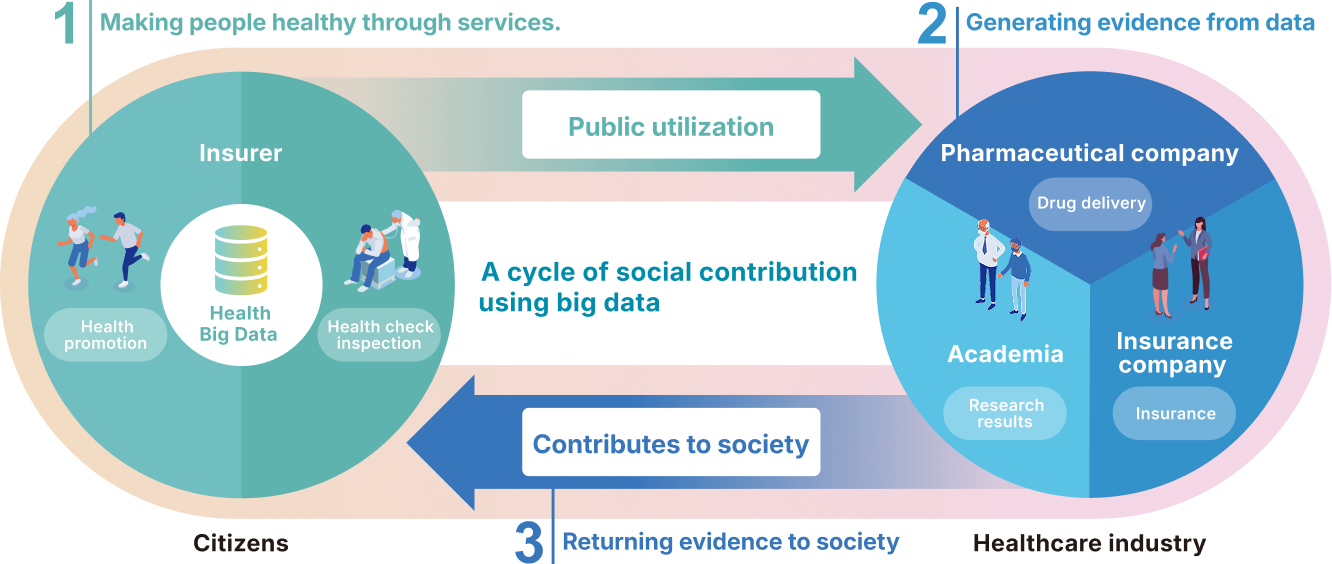
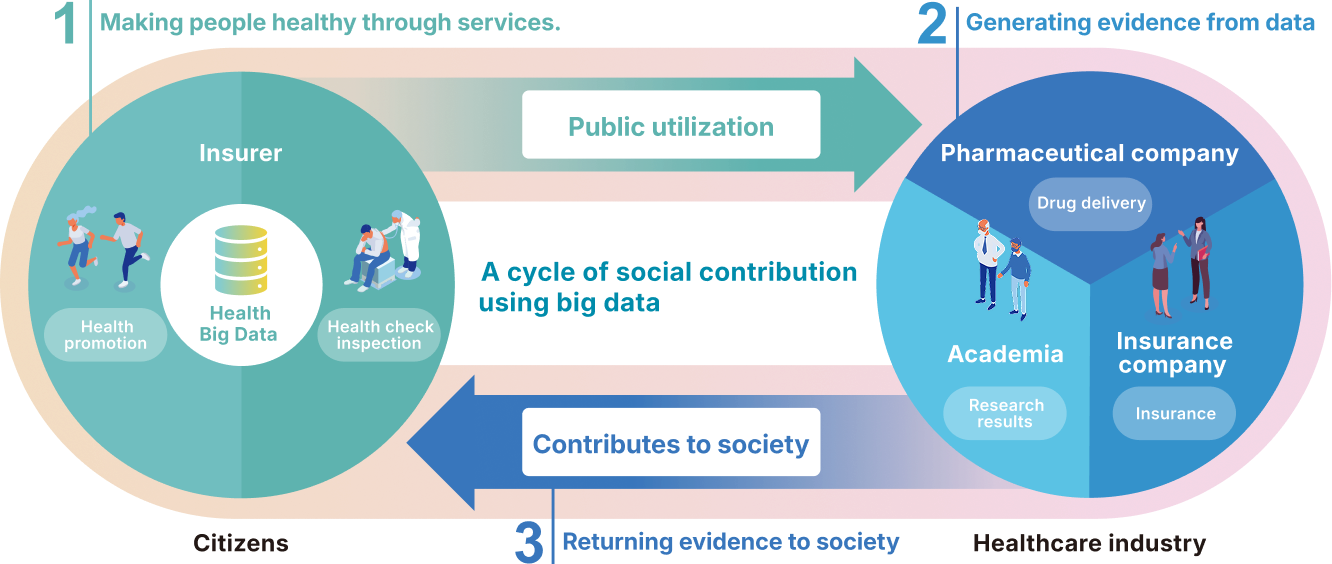
Bridging Big Data and Social Well-being
About DeSC Database
Data from “National health insurance” and “Latter-stage elderly healthcare system” are available in addition to “Employee health insurance”.
※2 The data has been anonymized and cannot be used to identify any specific individual.
Medical Data Available for Utilization in Japan
Insurer data: “high traceabilityˮ and “high comprehensivenessˮ of the population set.
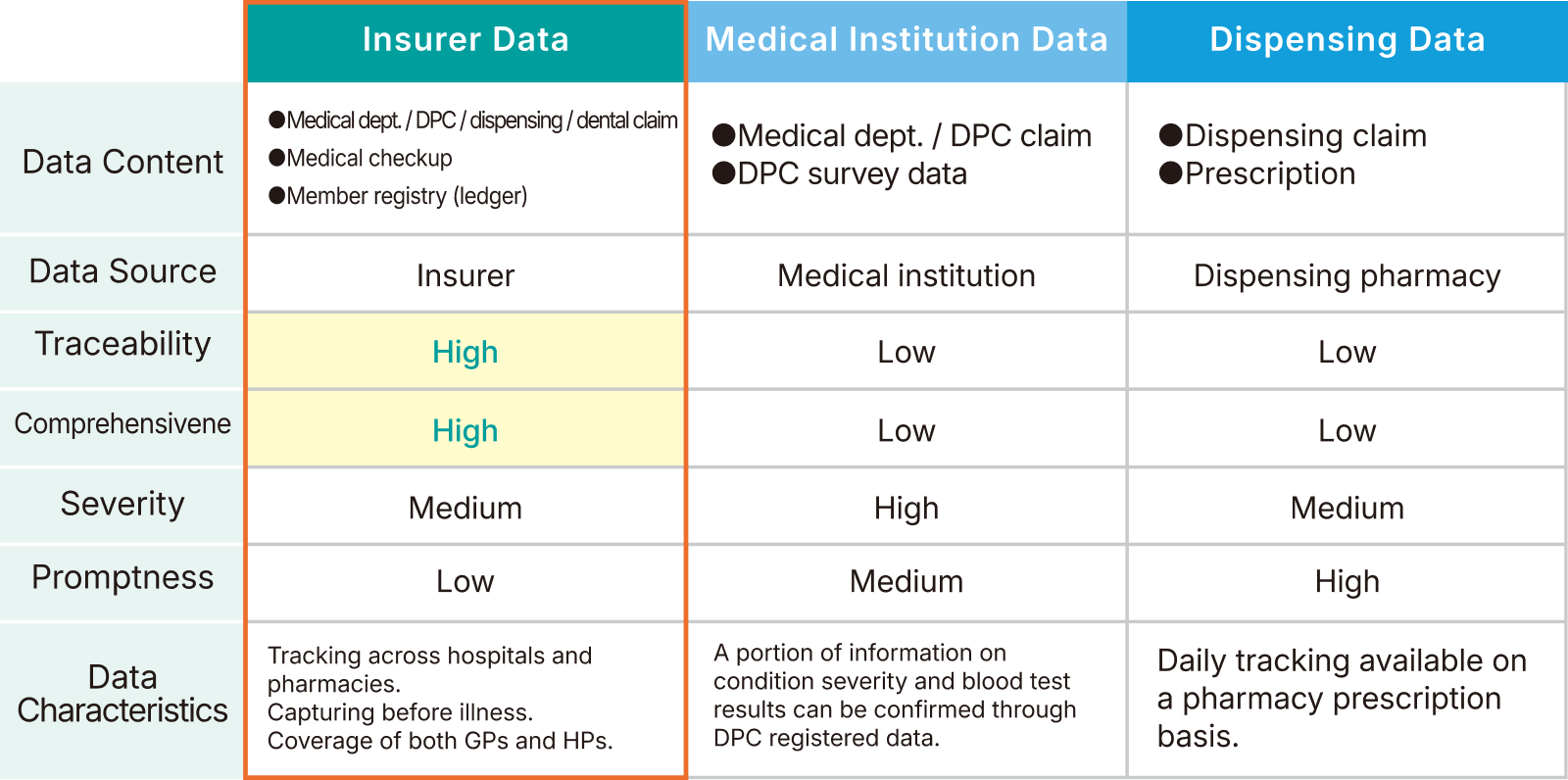
Characteristics of Insurer Data
Since insurer data is tied to an individual, we can observe their treatment journey from when the patient was healthy and through different medical institutions and pharmacies over the long term.
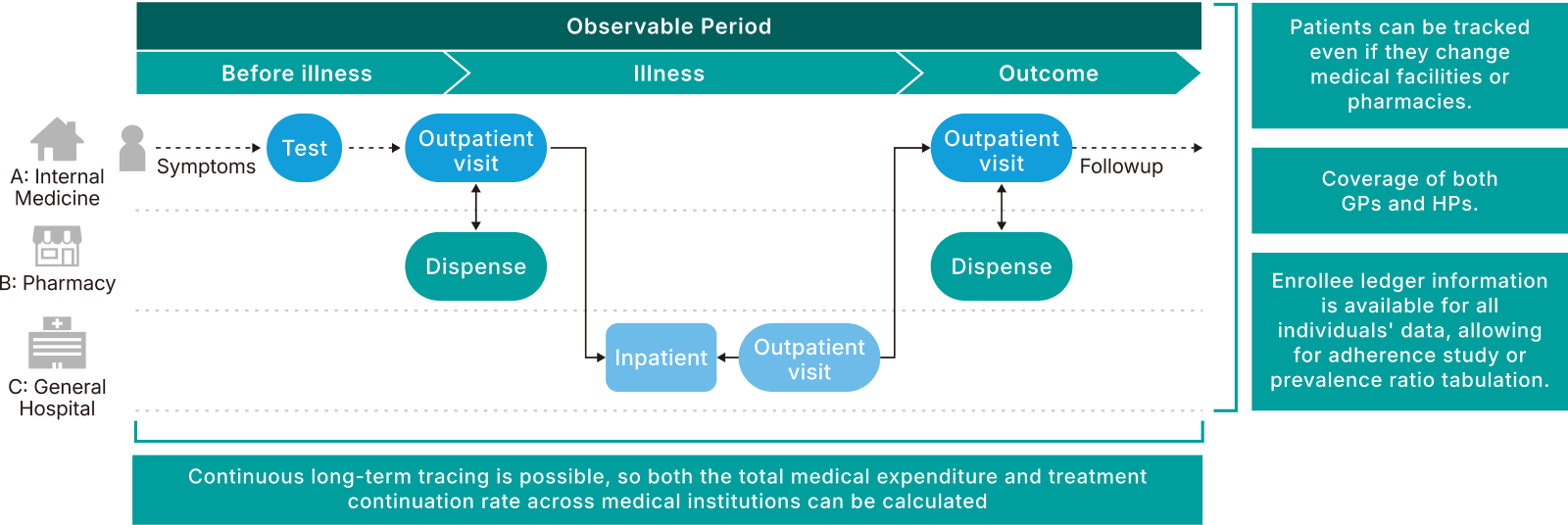
Comparison of Insurer Characteristics and Data We Can Provide
Our data is characterized by combining data from employee health insurance with the national health insurance andlatter-stage elderly healthcare system.
※ The data has been anonymized and cannot be used to identify any specific individual.Available data types, periods and items depend on the purpose of use.
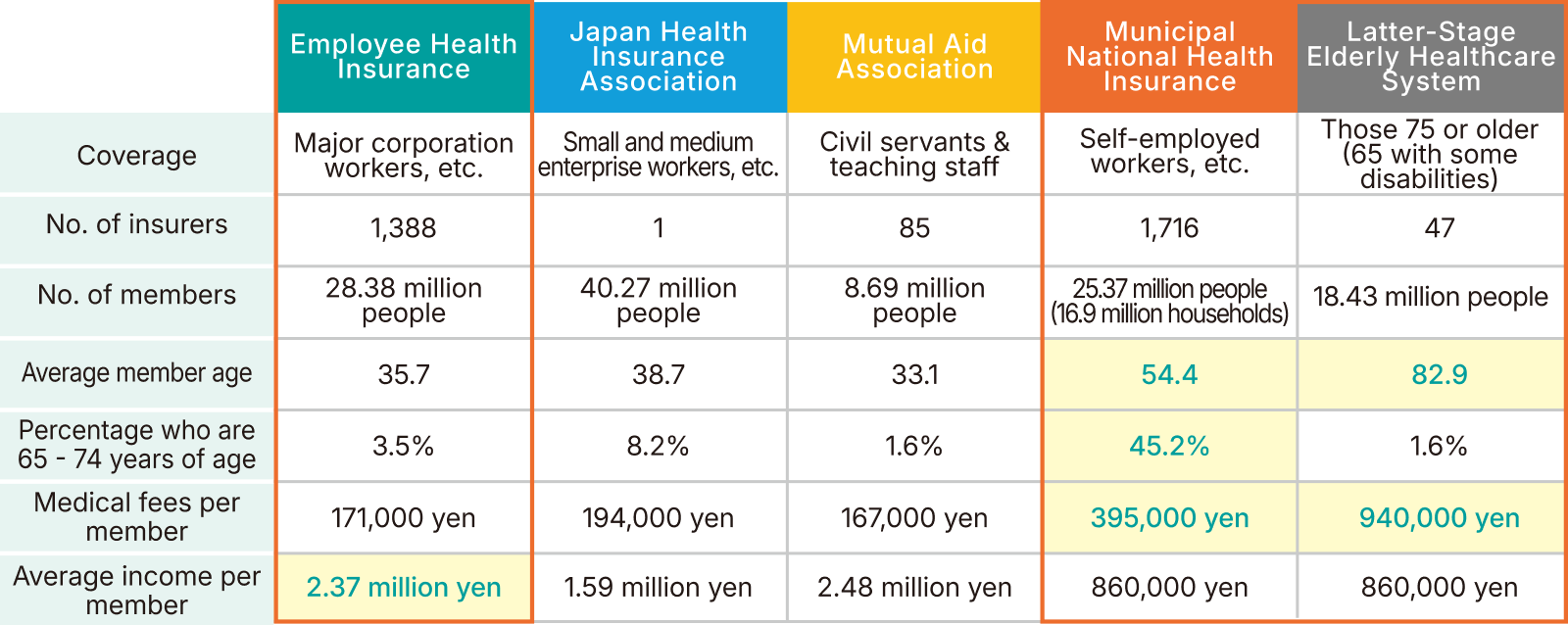
Excerpt from Ministry of Health, Labour, and Welfare homepage on Japan medical insurance
(https://www.mhlw.go.jp/stf/seisakunitsuite/bunya/kenkou_iryou/iryouhoken/iryouhoken01/index.html July 22nd 2024 modified)
※ The number of members represent the total number of individuals for each insurer, not the total volume provided in the DeSC database. Please contact us for details.
Service Lineup
01Data provision service
Provide support for database research and data sets
-
DeSC Database
Provides highly traceable and comprehensive insurer data covering all generations, including those covered by health insurance, national health insurance, and the elderly.
(Includes Employee Health Insurance data provided by IQVIA) -
Claim x ePRO service
Delivers new insights by linking claims and health checkup data with ePRO, based on the subscriber registry. -
MDV Medical institution database
Provides clinical information sourced from medical institutions, including specific laboratory test values. -
Multi-facility ICU Database 『One ICU』
Provides granular data from ICUs, including treatment processes, vital signs, procedures, medications, and laboratory results.
High traceability and comprehensiveness
Our platform enables integrated,longitudinal analysis by linking claims, health checkup, and kencom data at the individual level,based on the subscriber registry.
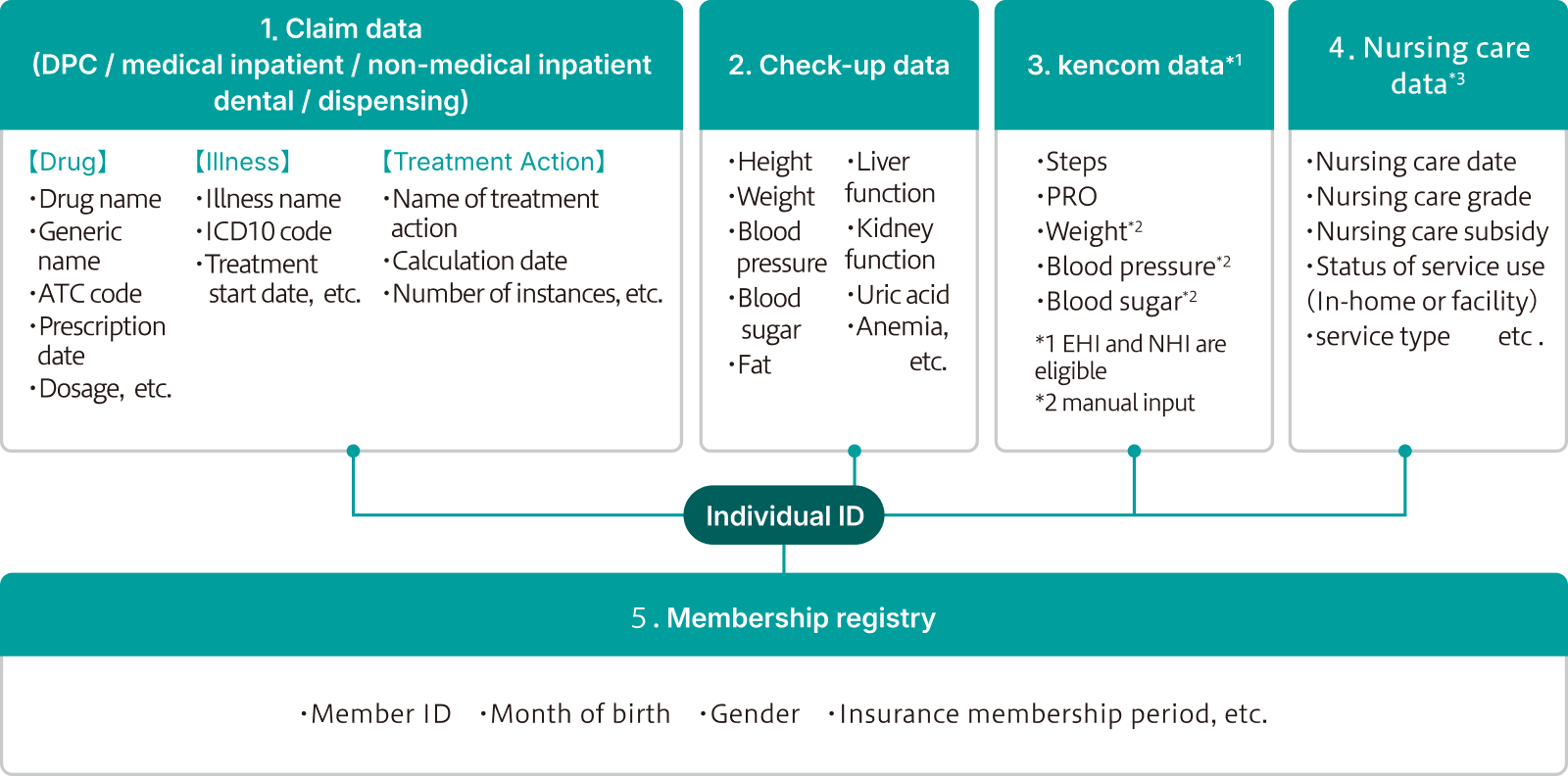
※1 All data is provided as Anonymized Personal Information,ensuring that specific individuals cannot be identified.
※2 kencom data covers residents of municipalities that have service contracts under Health Insurance Societies and National Health Insurance. However, linking this with claims,health checkup, and registry data is limited to insurers who have granted specific data usage permission.
※3 Long-term care data is available for National Health Insurance and the Medical Care System for the Late-stage Elderly within municipalities where data usage permission has been obtained.
Highly Accurate death flags
Access highly accurate mortality data for National Health Insurance (NHI) and Late-stage Elderly populations. These flags reflect the official reasons for insurance withdrawal as recorded by municipalities based on the Basic Resident Register.Coverage: Available for approx. 70% of NHI and 90% of the Medical Care System for the Late-stage Elderly.
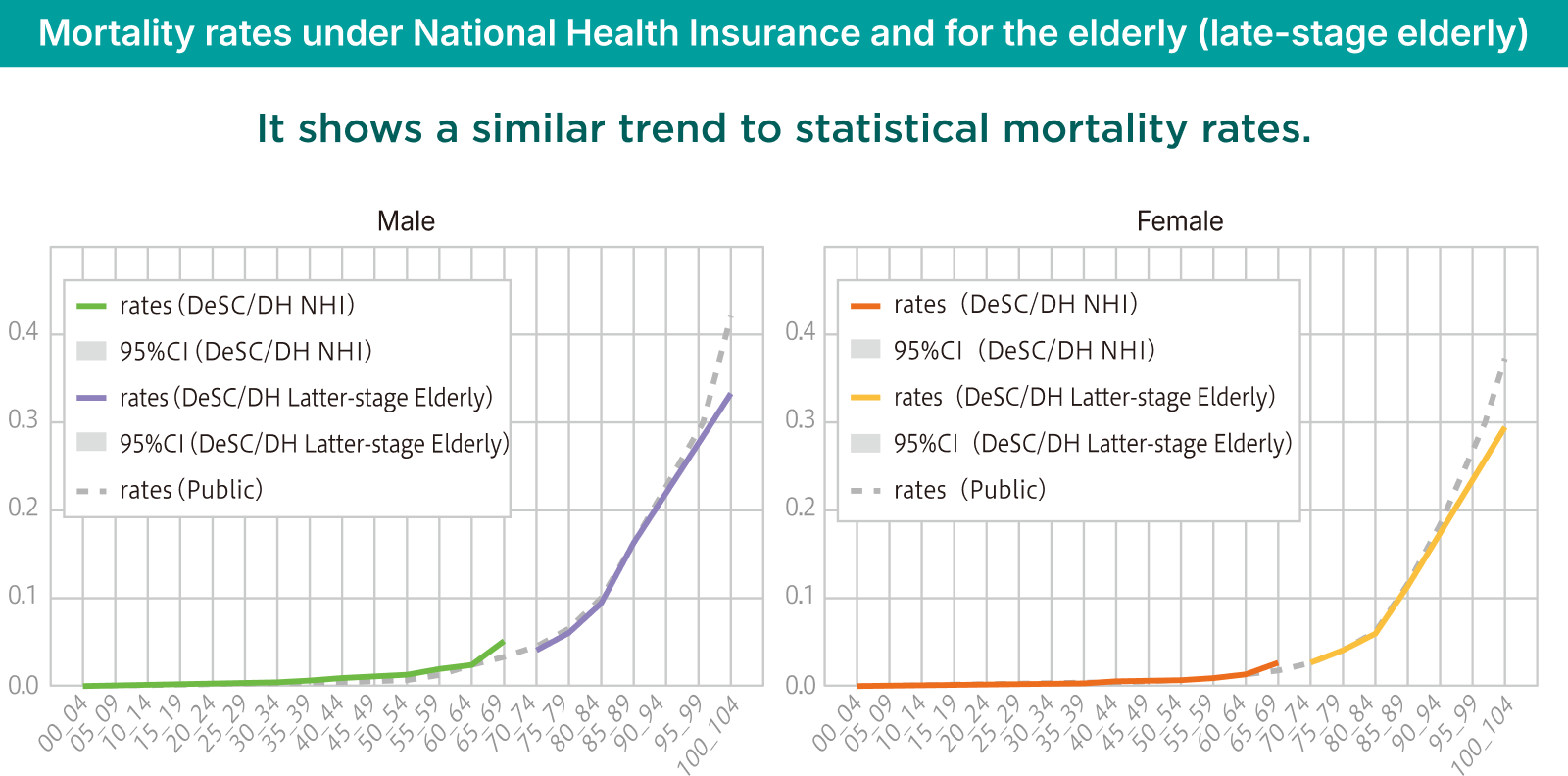
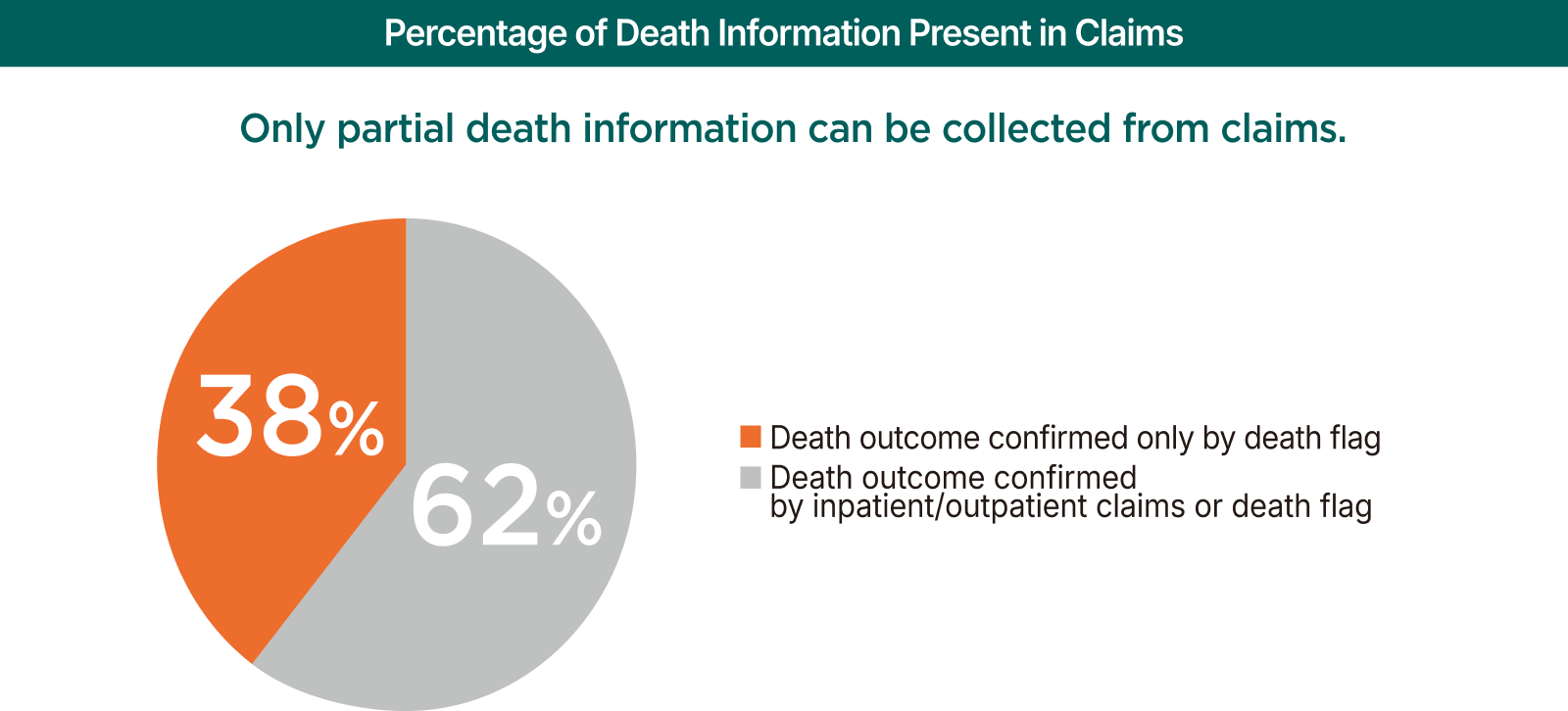
※Data Period: 2014/4〜2023/8 Methods: Death information on outcome category codes (Tenki Kubun Code) in inpatient and outpatient claims was compiled for those with death flag available.
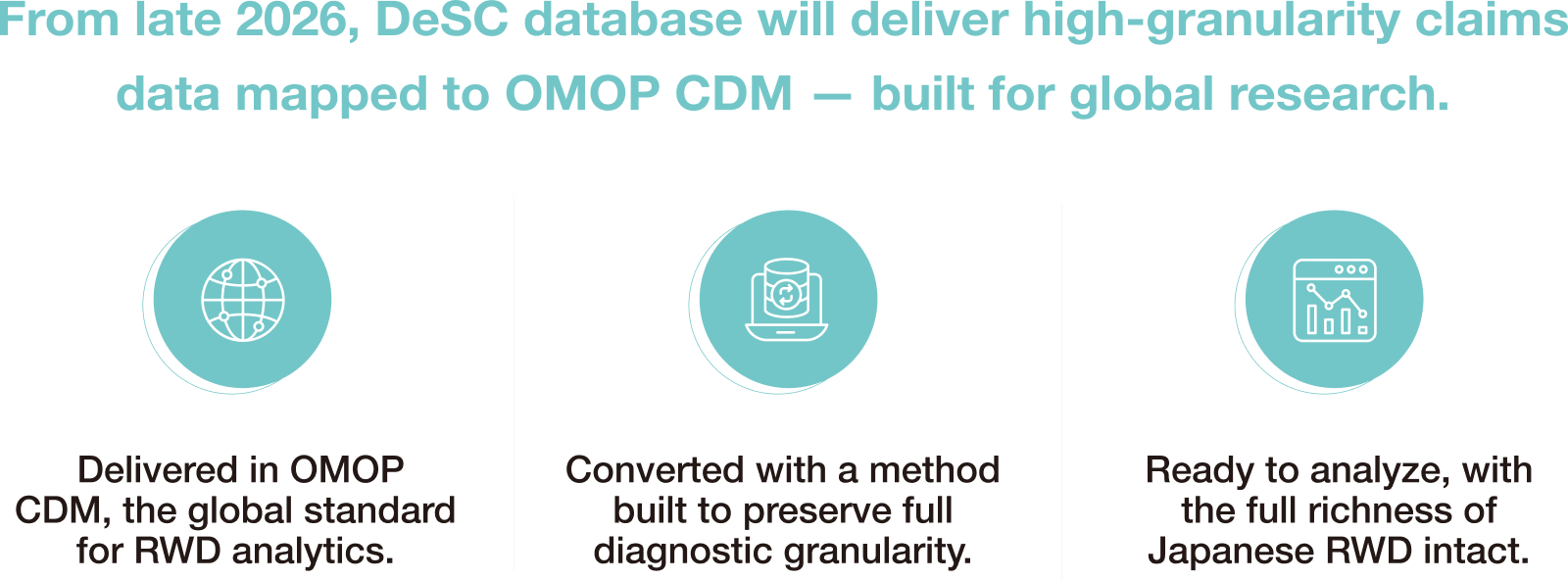
DeSC database is compatible with OMOP CDM conversion
-Not Only ICD-10.High-granularity.
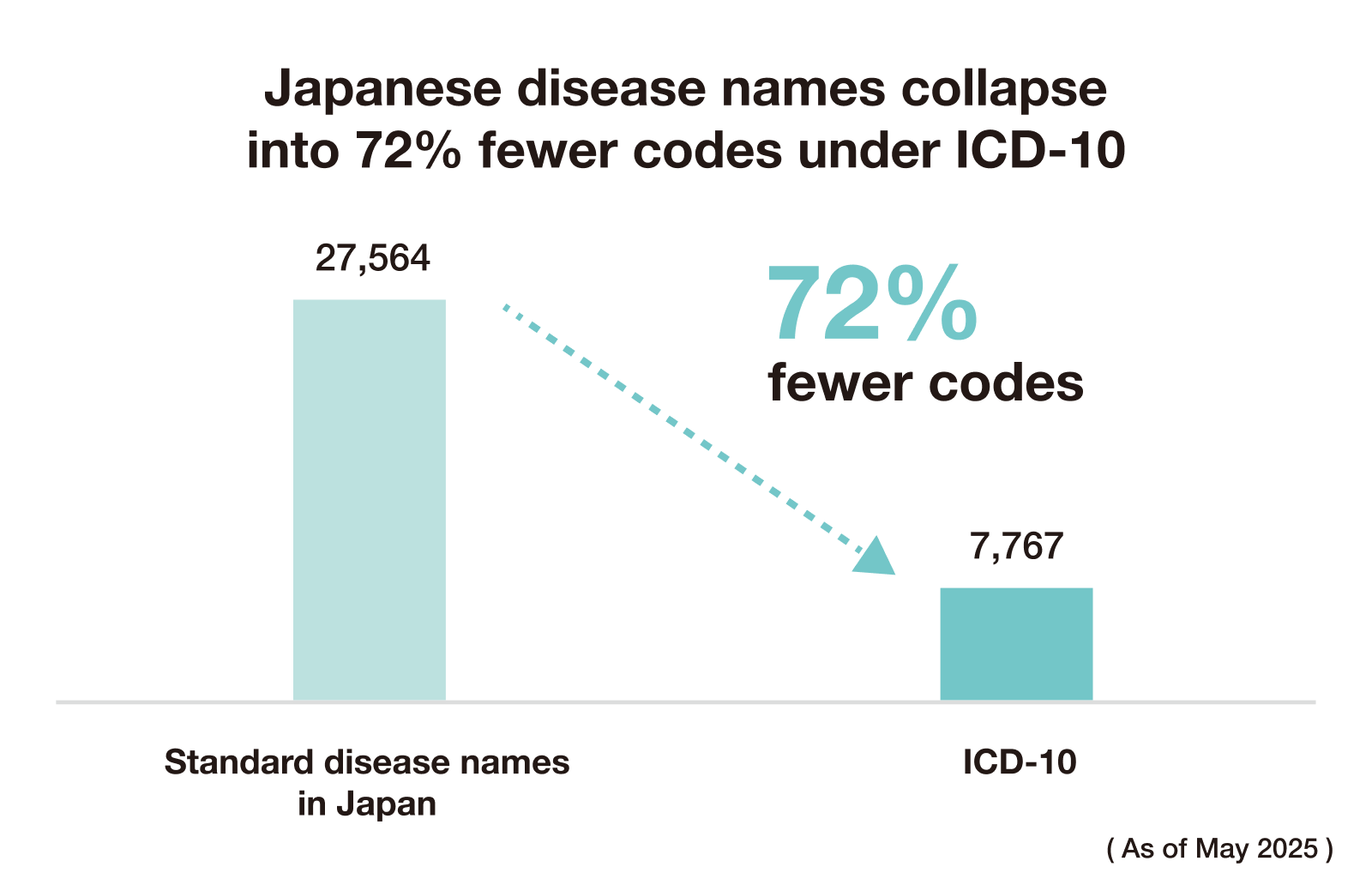
What ICD-10 leaves behind
Japan’s 27,000+ standard disease names map to just 7,767 ICD-10 codes. Work through ICD-10 alone and most of that clinical detail is gone before your analysis even begins.

02Consulting Services
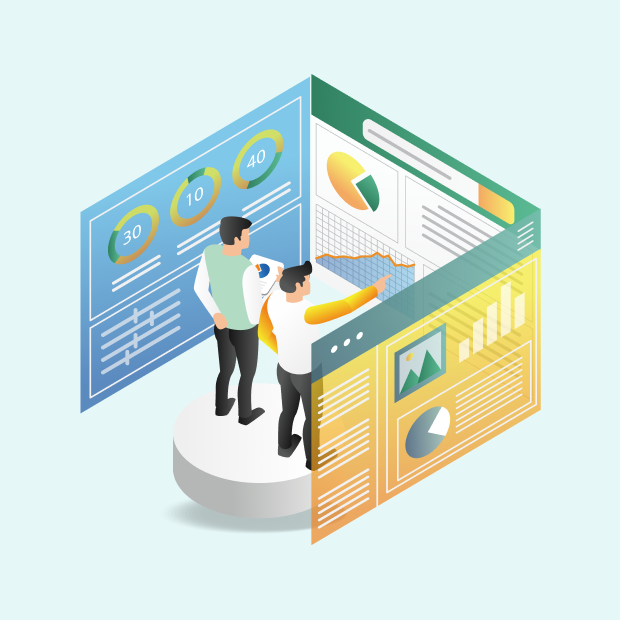
We provide solutions specifically tailored to healthcare challenges.
-
Adhoc aggregation service
Provides tailor-made statistical information designed to meet complex and specific requirements. -
Database Research projects
Offers comprehensive support from research design to evidence generation,going beyond simple data provision. -
Disease awareness projects(Only in Japan)
Leverages expertise in IT and entertainment to promote appropriate healthcare-seeking behavior, while providing visualization of behavioral change.
-
AI-Related projects
Achievements in DeSC Data Utilization
Since service launch our data has been used by multiple pharmaceutical companies and by doctors and researchers in academia.
Evidence utilizing the DeSC database
transactions with pharmaceutical companies,academic institutions, etc.
papers published & academic conference presentations
PRO through kencom® app
We regularly collect PRO (Patient Reported Outcome) data, such as QOL and labor productivity,through the kencom app. This data can be utilized to assess the QOL of individuals who have not sought medical consultation—insights that cannot be captured through claims or health checkup data alone.
Features for driving behavioral change
kencom offers diverse functionalities such as health risk prediction based on checkup data, gamified behavioral change services, and point-based incentives to motivate users.